
Explore NASA’s SLS Rocket design, its dramatic rollout at Kennedy Space Center in January 2026, and triumph over hydrogen leaks from Artemis tests. Uncover how this powerhouse will propel Artemis 2 astronauts toward the Moon.
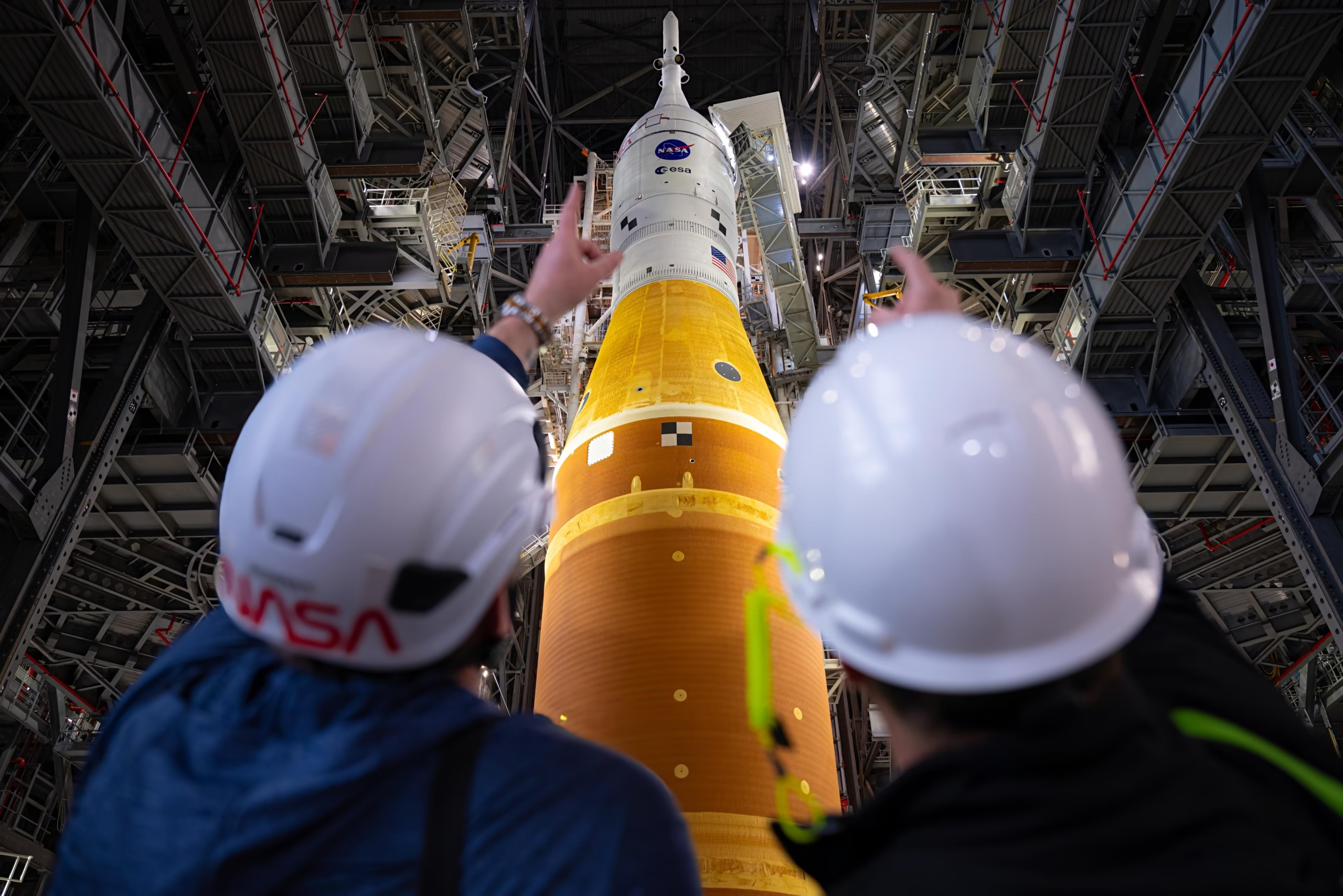
Hey there, space enthusiast! Imagine standing at the edge of history, watching a colossal rocket inch its way toward the launch pad, ready to carry humans back to the lunar neighborhood after more than half a century. That’s the vibe surrounding NASA’s Space Launch System, or NASA’s SLS Rocket, the beast that’s set to power Artemis 2.
If you’re like me, you’ve probably binge-watched old Apollo footage and wondered what the next chapter looks like. Well, buckle up because we’re diving deep into this engineering wonder – from its nuts-and-bolts design to the nail-biting rollout at Kennedy Space Center just this month, and how the team squashed those pesky hydrogen leaks that plagued earlier tests. Let’s chat about it like we’re grabbing coffee and geeking out over blueprints.
First off, why all the hype? Artemis 2 isn’t just another launch; it’s the first crewed mission in NASA’s Artemis program, slinging four astronauts – including the first woman and first person of color to loop around the Moon – on a 10-day joyride. No landing this time, but it’s the shakedown cruise proving we can get back there safely. And at the center of it all is SLS, NASA’s super heavy-lift rocket designed to hurl heavy payloads beyond Earth’s grasp. Think of it as the ultimate moving truck for space: capable of delivering Orion spacecraft, crew, and supplies straight to the Moon in one go. No pit stops in low Earth orbit required.
The Heart of NASA’s SLS Rocket : Design and Components
Let’s peel back the layers on what makes NASA’s SLS Rocket tick. At its core – literally – is the massive core stage, a 212-foot-tall orange behemoth built by Boeing. This thing is the backbone, housing the fuel tanks for liquid hydrogen and liquid oxygen that feed the engines. It’s evolvable, meaning NASA can tweak it for bigger missions down the line, like hauling habitats to Mars or giant telescopes with mirrors up to 26 feet across. The design draws from Shuttle heritage but amps it up for deep space – stronger materials, smarter systems, and a focus on sustainability for long-haul trips.
Flanking the core are two solid rocket boosters, each packing more thrust than the Saturn V’s first stage. These bad boys, provided by Northrop Grumman, are stretched versions of the Shuttle boosters, cranking out 75% of the total thrust at liftoff. They’re like the rocket’s sprinter muscles, burning hot and fast for the initial push through the atmosphere. Then there’s the upper stage: for Artemis 2, it’s the Interim Cryogenic Propulsion Stage (ICPS), a reliable Delta IV holdover that gives Orion the final kick toward the Moon. Future blocks, like Block 1B and Block 2, will swap in even beefier Exploration Upper Stages for payloads over 99,000 pounds to deep space.
What really sets SLS apart is its sheer power. In Block 1 config for Artemis 2, it can loft 59,000 pounds to the Moon – that’s like tossing 10 elephants into lunar orbit. The whole stack stands 322 feet tall, taller than the Statue of Liberty, and weighs in at 5.75 million pounds fully fueled. Engineers obsessed over every detail: from the advanced welding on the core stage tanks to the avionics brains that keep everything humming. It’s not just brute force; it’s smart force, with redundant systems to handle the harsh vibes of space. Picture this during ascent, the rocket hits speeds over 17,500 mph, shaking off Earth’s gravity like a dog after a bath. That’s engineering poetry right there.
Powering the Beast: Engines and Propulsion
No rocket chat is complete without geeking on the engines. NASA’s SLS Rocket rocks four RS-25s at the base of the core stage – these are upgraded Space Shuttle main engines, each gulping 1,500 gallons of propellant per second. Yeah, you read that right. They’re aerojet rocketdyne masterpieces, running on super-cold liquid hydrogen and oxygen for that clean, high-efficiency burn. For Artemis 2, NASA recycled engines from Shuttle missions, tweaking them for higher thrust and better performance in the vacuum of space.
The propulsion system’s a symphony of cryogenics. Liquid hydrogen, chilled to -423°F, is tricky stuff – it wants to boil off or leak if you’re not careful. But that’s where the magic happens: mixing it with liquid oxygen creates a reaction hotter than lava, generating over 2 million pounds of thrust per engine. Add the boosters’ 3.6 million pounds each, and you’ve got 8.8 million pounds total at launch – more than any rocket flying today. It’s this combo that lets SLS do what others can’t: direct shots to the Moon, saving time and complexity.
The Recent Rollout: From Assembly to Launch Pad
Fast-forward to right now – January 2026 – and the excitement’s palpable. Just yesterday, on January 17, NASA’s crawler-transporter 2, that massive tracked beast from the Apollo era, started hauling the fully stacked SLS and Orion from the Vehicle Assembly Building (VAB) at Kennedy Space Center. It’s a slow crawl, about 0.1 mph over four miles to Launch Complex 39B, taking 8-12 hours. But man, what a sight: the 322-foot stack inching out under the Florida sun, doors of the VAB peeling back like a curtain on opening night.
This rollout marks the home stretch for Artemis 2 prep. Teams wrapped up stacking in the VAB late last year, integrating the core, boosters, upper stage, and Orion. Now at the pad, they’re gearing up for the Wet Dress Rehearsal – basically, fueling the rocket and running through countdown without ignition. It’s crunch time: checking comms, propellant lines, and the emergency egress system. Launch window opens February 6, but as any space fan knows, dates can slip. Still, seeing it roll out live on streams? Chills. The crawler’s been prepped since early January, positioning under the mobile launcher to lift the whole shebang. No major hiccups reported so far – a far cry from Artemis 1’s delays.
From X posts, folks at KSC are buzzing. One photographer shared shots from the press site, capturing the anticipation. And NASA confirmed the rollout’s complete, with the stack now at 39B for final tests. It’s these moments that remind us space exploration’s a team sport, with thousands of folks pouring their hearts into it.
Overcoming Hurdles: Tackling Hydrogen Leaks
Ah, the NASA’s SLS Rocket leaks – the drama that kept us on edge during Artemis 1. Back in 2022, wet dress rehearsals hit snags with hydrogen escaping from quick disconnect seals at the core stage’s base. Scrubs galore: one test loaded only 5% hydrogen before calling it quits. Why? Hydrogen’s sneaky – smallest molecule around, it slips through tiny gaps, especially under extreme pressures and temps. A faulty seal or umbilical line, and boom, leak.
But NASA’s not one to back down. They rolled back to the VAB, swapped seals, and tweaked procedures. For the final test, they went “kinder, gentler” on fueling – slower ramps to avoid thermal shocks. 19 Even masked some data to push through, confirming the fix. 26 Repairs happened right on the pad for one scrub, proving flexibility. 21 Lessons learned? Better seals, improved inspections, and automated monitoring to catch issues early.
For Artemis 2, these fixes are baked in. The core stage’s undergone rigorous testing, and the rollout includes another tanking demo to verify. No leaks reported in recent updates – fingers crossed it stays that way. It’s a testament to iterative engineering: test, fail, fix, fly. Without those Artemis 1 headaches, Artemis 2 wouldn’t be as solid.
Artemis 2: What Lies Ahead
Looking forward, Artemis 2’s a pivotal step. Crew: Reid Wiseman, Victor Glover, Christina Koch, and Jeremy Hansen. They’ll test Orion’s life support, abort systems, and more during the lunar flyby. Success paves the way for Artemis 3’s landing in 2027 or so. SLS isn’t just a rocket; it’s the gateway to sustainable Moon ops, Mars scouting, and beyond. With evolvable blocks, it’ll handle bigger dreams – think cargo for lunar bases or probes to Europa.
But it’s not without critics: costs, timelines, competition from SpaceX’s Starship. Yet SLS’s proven tech gives it an edge for crew safety. As we watch the pad tests unfold, remember: this is humanity pushing boundaries, one rollout at a time.
Source: https://x.com/i/status/2012684547419193794
FAQs: NASA’s SLS Rocket
What is the Space Launch System (SLS)?
SLS is NASA’s heavy-lift rocket for deep space missions, capable of sending crew and cargo to the Moon and beyond in a single launch.
When is Artemis 2 launching?
The launch window opens as soon as February 6, 2026, following the recent rollout and wet dress rehearsal at Kennedy Space Center.
How did NASA fix the hydrogen leaks from Artemis 1?
By replacing seals, adjusting fueling procedures to be more gradual, and conducting repairs on the pad, ensuring better containment for the volatile propellant.
What’s the difference between SLS Block 1 and Block 2?
Block 1, used for Artemis 2, lifts about 59,000 pounds to the Moon. Block 2 ups it to over 99,000 pounds with an advanced upper stage for heavier payloads.
Why is the rollout a big deal?
It shifts SLS from assembly to launch-ready mode, allowing final tests like fueling and countdown drills at the actual pad.
How powerful is NASA’s SLS Rocket compared to other rockets?
With 8.8 million pounds of thrust, it’s the most powerful operational rocket, surpassing even the Saturn V for certain missions.
There you have it – a front-row seat to the NASA’s SLS Rocket saga. What’s got you most excited about Artemis 2? Drop your thoughts; space chats are always better shared.
Nuclear Propulsion in Space: Is It Safe Option to Make Multiple Trips On Mars?