
SpaceX Falcon 9 is set to launch the advanced U.S. Space Force GPS III-9 satellite tonight at 11:38 p.m. ET from Cape Canaveral. Full mission breakdown, reusable booster history, landing plans, live stream links, and the impact on global navigation accuracy.
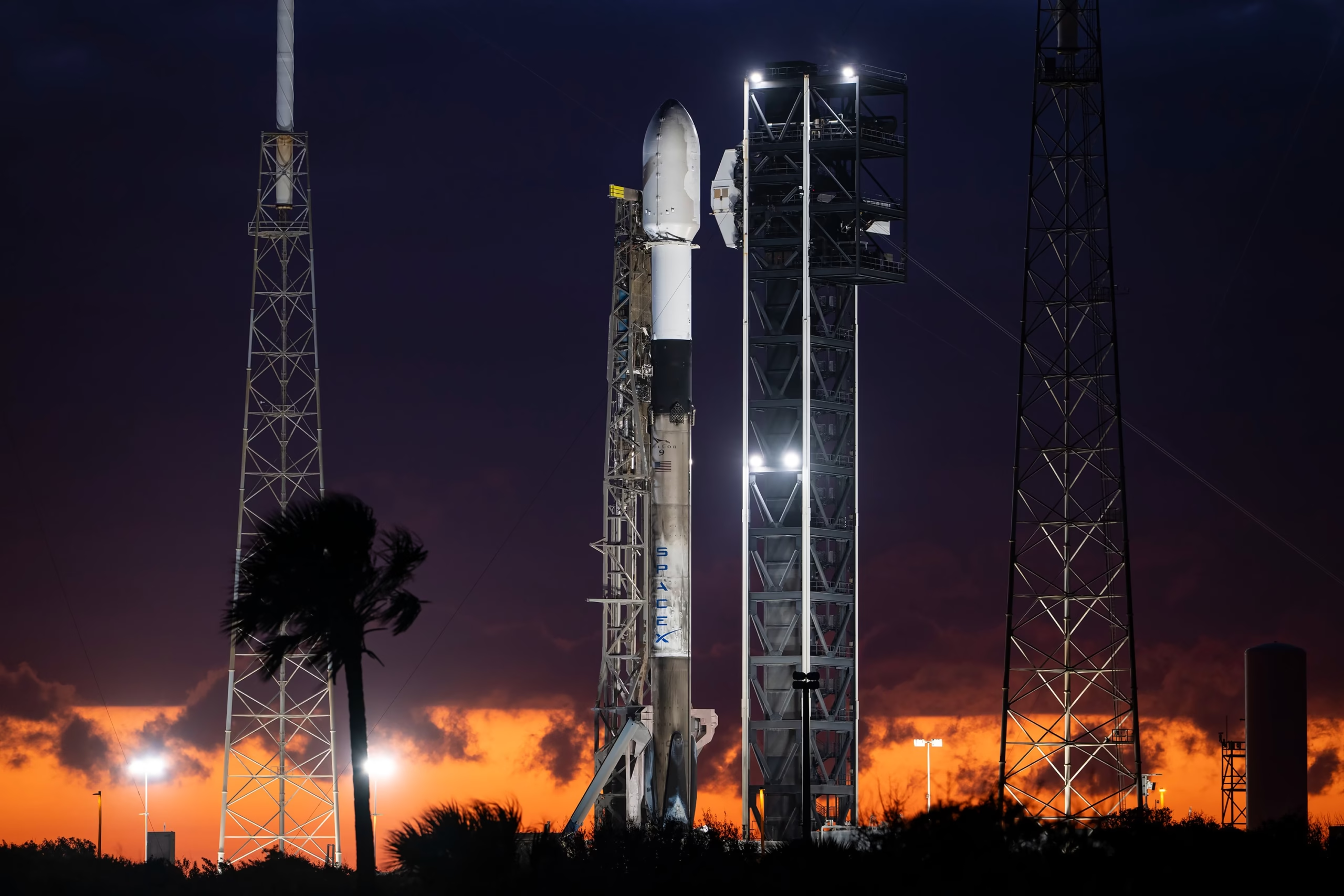
Hey everyone, especially those of you staying up late or setting alarms for the early hours—tonight could be another spectacular SpaceX moment. Right now, on the evening of January 27, 2026, teams at Cape Canaveral are putting the finishing touches on Falcon 9 for the GPS III-9 mission. If everything holds, we’re looking at a beautiful nighttime liftoff that will deliver one more next-generation GPS satellite to medium-Earth orbit. Whether you’re a space fan, a navigation geek, or just love watching rockets land, this one has all the ingredients for an exciting show. Let’s walk through every detail so you know exactly what to expect and why this launch is worth your attention.
Advanced U.S. Space Force GPS III-9 Satellite Launch Window & Location: When and Where to Watch
The primary 15-minute launch window opens at 11:38 p.m. Eastern Time (that’s 10:08 a.m. IST on January 28 for anyone reading from India or nearby time zones). If clouds roll in, upper-level winds pick up, or there’s a last-minute technical issue, SpaceX has a backup window tomorrow night starting at 11:34 p.m. ET on January 28.
Liftoff will happen from Space Launch Complex 40 (SLC-40) at Cape Canaveral Space Force Station, Florida—the same pad that has sent countless Falcon 9s skyward in recent years. Night launches from the Cape always look dramatic with the bright exhaust plume cutting through the darkness, so if you’re anywhere near the coast, locals might catch a glimpse from a distance.
Mission Payload: Meet GPS III-9 (SV09)
This flight carries GPS III Space Vehicle 09, the ninth satellite in Lockheed Martin’s modernized GPS III series. Nicknamed in honor of Col. Ellison Onizuka—the Challenger STS-51-L mission specialist and the first Asian-American astronaut—this spacecraft is packed with upgrades that matter both on the battlefield and in your pocket.
The big highlights include:
- M-Code military signals that are far harder to jam or spoof
- Three times better positioning accuracy than older GPS satellites
- Up to eight times stronger anti-jamming capability
These improvements help ensure troops, aircraft, ships, and precision-guided weapons can navigate reliably even in electronically contested areas. At the same time, civilian receivers get cleaner, faster signals—meaning your phone, car, or fitness tracker locks on quicker and stays accurate in tough spots like city streets or dense tree cover.
GPS III-9 joins a constellation that’s gradually growing toward full operational capability with the newer Block III satellites. Every addition makes the whole system more robust and future-proof.
Falcon 9 Hardware: Fifth Flight for This Proven Booster
One of the coolest parts of tonight’s mission is the first-stage booster itself. This is its fifth flight—a solid milestone that shows how mature SpaceX’s reusability program has become.
Previous missions for this booster include:
- KF-01
- IMAP (Interstellar Mapping and Acceleration Probe)
- NROL-77 (a classified NRO payload)
- One Starlink group deployment
After pushing the upper stage and payload toward orbit, the booster will separate cleanly, flip around, and perform its entry and landing burns. It’s targeting a soft touchdown on the droneship A Shortfall of Gravitas, which will be positioned hundreds of kilometers downrange in the Atlantic. If weather and trajectory cooperate, we should get those classic drone-ship camera shots of the booster touching down with landing legs extended.
The second stage, meanwhile, will handle the longer burn needed to reach medium-Earth orbit (around 20,200 km altitude) and deploy the satellite about 90 minutes after launch.
Advanced U.S. Space Force GPS III-9 Satellite Launch Live Stream & Viewing Options: Don’t Miss a Second
SpaceX will start their official webcast roughly ten minutes before liftoff (around 11:28 p.m. ET). You can watch it directly on:
- The SpaceX website
- The @SpaceX account on X
- The X TV app
The stream usually features multiple camera angles, onboard telemetry, mission commentary, and—if the landing succeeds—real-time footage from the droneship. Night launches add extra drama with the glowing engines and starry backdrop, so it’s definitely one to watch live if you can.
Pro tip: Follow @SpaceX and @SpaceForceDoD on X for real-time updates in case of any holds, scrubs, or T-0 announcements.
Why Advanced U.S. Space Force GPS III-9 Satellite Launch Mission Stands Out in the Bigger Picture
While every launch is exciting, GPS III-9 carries special weight because it strengthens one of the most critical satellite constellations on Earth. Modern life—from ride-sharing apps and airline routes to stock trading timestamps and emergency response—depends on GPS. Military users need even higher assurance, especially as electronic warfare capabilities grow worldwide.
The U.S. Space Force has been pushing hard to accelerate GPS modernization. Recent missions have moved from years-long timelines to months-long rapid-response deployments, and switching this particular satellite from a planned Vulcan Centaur launch to Falcon 9 is a great example of that flexibility. SpaceX’s quick turnaround and reusability give national security programs more options and redundancy.
Success tonight means one more brick in a tougher, more accurate GPS network. It also keeps demonstrating that reusable rockets can handle high-value government payloads just as reliably as expendable ones used to.
What Could Go Wrong & How Teams Handle It
Launch is never risk-free. Possible hold-up factors include:
- Coastal weather (clouds, lightning, or winds aloft)
- Range safety issues
- Minor vehicle anomalies during countdown
SpaceX and the Space Force teams are experienced at calling safe holds early rather than pushing through marginal conditions. If tonight doesn’t work, tomorrow’s window is ready, and they’ll keep iterating until the rocket flies.
Looking Ahead: More GPS Upgrades & SpaceX’s Growing Role
Advanced U.S. Space Force GPS III-9 Satellite is part of the initial ten-satellite Block III batch, but follow-on GPS IIIF models are already in production with even more advanced features—digital payloads, laser retroreflectors for better orbit tracking, and potential for on-orbit servicing or upgrades.
SpaceX is expected to handle several of those future flights too, continuing to prove they’re a trusted partner for the most sensitive national security missions.
FAQs: Advanced U.S. Space Force GPS III-9 Satellite Launch
What exact time is the Advanced U.S. Space Force GPS III-9 Satellite launch tonight?
The window opens at 11:38 p.m. ET on January 27, 2026 (15-minute duration). Backup window is 11:34 p.m. ET on January 28.
From which launch pad is it happening?
Space Launch Complex 40 (SLC-40), Cape Canaveral Space Force Station, Florida.
What does the GPS III-9 satellite improve?
It brings three times better accuracy, much stronger anti-jamming (M-Code), and overall constellation resilience for both military and civilian users.
How many times has this Falcon 9 booster flown before?
This is its fifth flight. Previous missions: KF-01, IMAP, NROL-77, and one Starlink group.
Where will the booster land?
On the droneship A Shortfall of Gravitas stationed in the Atlantic Ocean.
How do I watch the live webcast?
Start at ~11:28 p.m. ET on SpaceX’s website, @SpaceX on X, or the X TV app.
Why did this mission switch to Falcon 9?
It was originally manifested on ULA’s Vulcan but traded to SpaceX for faster scheduling, with a future mission swapped the opposite direction to keep balance.
How high will the satellite go?
Medium-Earth orbit, approximately 20,200 km altitude, joining the classic GPS constellation plane.
Is this launch part of rapid satellite deployment efforts?
Yes—the Space Force has been shortening timelines significantly to get new capabilities on orbit faster.
What happens after satellite deployment?
The second stage will usually perform a deorbit burn to safely dispose of itself, while the satellite begins checkout and eventual activation into the operational constellation.
Thanks for reading—hope you get to catch the launch tonight. Clear skies and smooth countdown to everyone watching from your hometown or anywhere else around the world!
Starship Set to Launch Again Next Month: Elon Musk’s Bold Next Step in Space Exploration