
NASA Crew-11 medical evacuation : Discover the details of NASA’s first medical evacuation from the ISS with Crew-11 astronauts aboard SpaceX’s Crew Dragon. Learn about the health scare, timeline, and future implications for space exploration in this in-depth 2026 analysis. Stay informed on latest space news!
NASA Crew-11 medical evacuation – Hey everyone, it’s me, your go-to space enthusiast and writer, diving into one of the most gripping stories unfolding right now in the world of space exploration. If you’ve been following along with me on this blog, you know how much I love breaking down these cosmic adventures in a way that feels real and relatable.
Today, on January 14, 2026, we’re talking about something unprecedented: NASA’s first-ever medical evacuation from the International Space Station. Picture this – a team of astronauts, hundreds of miles above Earth, facing a health issue that demands an early trip home. It’s not just news; it’s a human story of resilience, technology, and the unbreakable bond between explorers and the teams supporting them back on the ground.
I want to walk you through this step by step, like we’re chatting over coffee about the latest space drama. We’ll cover what sparked this evacuation, who these incredible astronauts are, the nuts and bolts of their mission, and what it all means for the future. As your guide through these starry tales, I’ll keep it engaging, packed with facts, and optimized for anyone searching for the latest on NASA missions or ISS updates. Whether you’re a longtime reader who’s been with me since my early posts on Mars rovers or a new visitor curious about space travel, let’s unpack this together and see why it’s such a big deal.
The Sudden Health Concern: What Sparked the NASA Crew-11 Medical Evacuation?
Alright, readers, let’s start with the heart of the matter – the unexpected medical issue that turned this routine mission upside down. Imagine you’re up there on the ISS, floating in zero gravity, conducting experiments that could change our understanding of the universe, and then bam – a health concern pops up. That’s exactly what happened to one of the Crew-11 astronauts on January 7, 2026. NASA isn’t spilling all the details to respect privacy, but they’ve made it clear: the astronaut is stable, and this early return is all about getting them the best possible care back on Earth.
You know how I always emphasize the human side in my articles? Well, space isn’t just about rockets and stars; it’s about people dealing with real challenges. In microgravity, your body goes through wild changes – fluids shift around, muscles weaken, bones lose density. We’ve seen minor issues before, like infections or even blood clots, but they’ve usually been handled right there in orbit. This time, though, the decision was to cut the mission short, making it the first medical evacuation in the ISS’s 25-year run. It’s a bold move, and as I explain it to you, my audience, think about the consultations involved: NASA’s top docs, experts from JAXA and Roscosmos, and SpaceX engineers all weighing in to prioritize safety.
Why does this matter to us down here? It shows how far space medicine has come. With tools like the Crew Dragon, we can now respond flexibly without massive disruptions. In my view, as someone who’s written about countless missions, this sets a new standard – one that could save lives on longer trips, like to Mars, where you can’t just pop back home. Stick with me as we explore more; I promise it’ll keep you hooked.
Profiling the Crew-11 Team: The Astronauts at the Center of the Story
Now, let’s put faces and stories to this event, because for me, the best part of writing about space is highlighting the heroes involved. Leading Crew-11 is Zena Cardman, NASA’s commander and a geobiologist by trade. I’ve followed her career, and let me tell you, her work on life in extreme environments is fascinating – it’s like she’s prepping us for finding aliens by studying microbes on the ISS. She’s the kind of leader who keeps things steady, and I can only imagine how she’s guiding her team through this.
Then there’s Mike Fincke, the pilot and a true space veteran. With over 381 days in orbit under his belt, he’s been through it all – from ISS expeditions to backing up early commercial flights. Readers, if you’ve read my pieces on long-duration spaceflight, you know pros like Fincke are the backbone of these missions. His experience must be invaluable right now, keeping everyone calm during the prep for return.
Don’t forget the international flair: Kimiya Yui from JAXA, an aerospace engineer who’s nailed tech demos and snapped some stunning Earth photos, and Oleg Platonov from Roscosmos, the systems whiz ensuring everything runs smoothly. As I share this with you, my audience, remember these aren’t superheroes – they’re people like us, with families waiting anxiously. In their recent messages, they’ve shared mixed feelings about leaving early, from gratitude for the views to eagerness for home. It’s moments like these that make space feel personal, and I’m excited to bring that to you.
From Launch to Early Return: Recapping the NASA Crew-11 Medical Evacuation Mission
Let’s rewind a bit, folks, to how this all started, because context is key in my storytelling. Crew-11 blasted off on August 26, 2025, from Kennedy Space Center in Florida aboard the SpaceX Crew Dragon Endeavour. It was a textbook launch – smooth docking after about a day, joining Expedition 74 on the ISS. As someone who’s covered launches live (well, from my desk, but with the same excitement), I can say it was inspiring.
Once up there, they hit the ground running – or floating, I should say – with over 250 experiments. We’re talking plant growth in zero-g for future food supplies, materials testing for better spacecraft, and health studies on how space affects the body. It was all geared toward bigger goals, like Artemis moon missions. Everything was cruising toward a mid-February end until that medical curveball.
Now, with the early exit, the work shifts to the remaining crew: Stephanie Wilson from NASA, Sergey Kud-Sverchkov (now commanding) from Roscosmos, and Andreas Mogensen from ESA. They’ll keep the science rolling without a hitch, thanks to the ISS’s smart design. As I explain this to you, readers, it’s a reminder of how adaptable space ops have become – no more single-vehicle dependencies like in the old days.
Breaking Down the Evacuation Process: A Timeline of the Return
Okay, audience, let’s get into the nitty-gritty – the how of getting them home safely. I love geeking out on these details because it shows the genius behind the scenes. It all kicks off with prep on the ISS: packing cargo, checking suits, and drilling procedures. Yesterday, January 13, there was this cool change-of-command ceremony – Fincke handed a symbolic “golden key” to Kud-Sverchkov. It’s traditions like that that add a human touch.
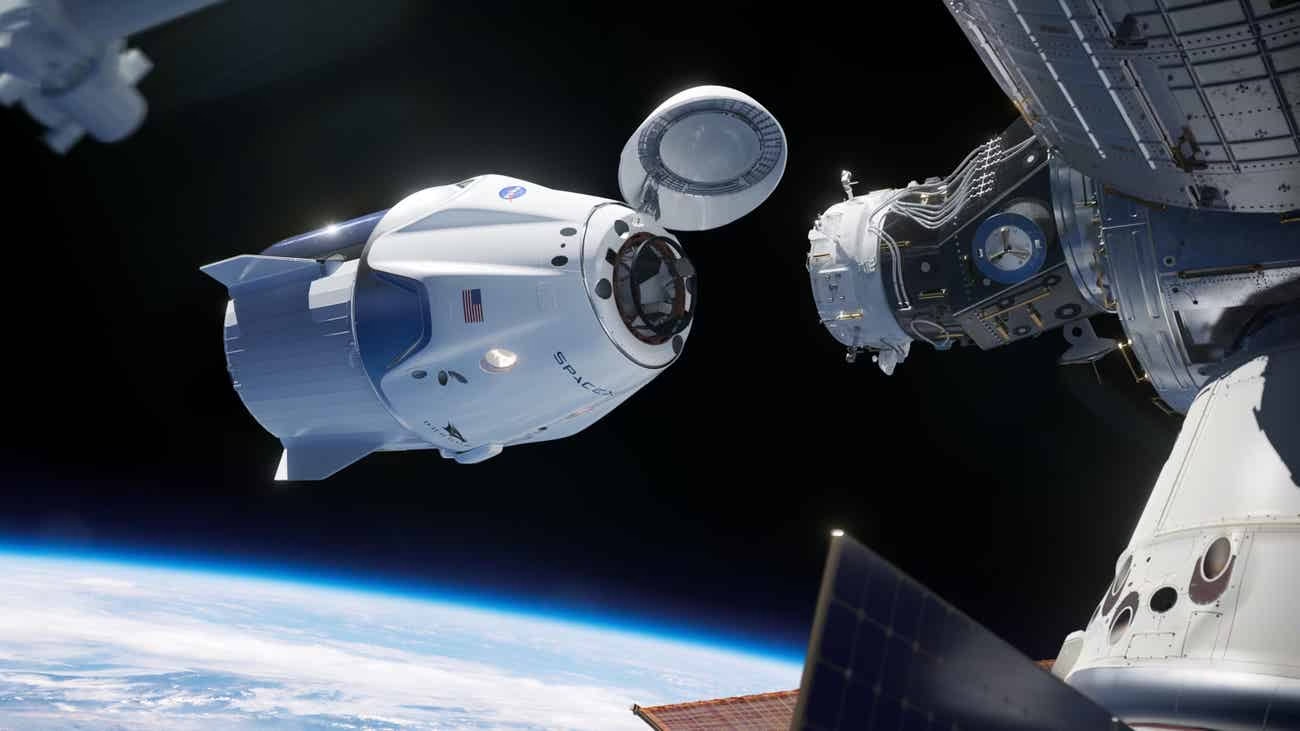
Today, January 14, things heat up. Hatch closure around 3:30 p.m. EST, then undocking at 5:05 p.m. from the Harmony module. Once free, the Dragon fires thrusters to pull away, then sets up for deorbit. The whole trip back? About 10.5 hours, ending with a splashdown off California at 3:41 a.m. EST tomorrow. Reentry is intense – heat shields glowing at thousands of degrees, parachutes popping for a soft landing.
Recovery teams from SpaceX are ready with ships and choppers, plus medics for immediate checks, especially for our affected astronaut. Weather looks good, but they’ve got backups. As your writer, I’m telling you, this process is a masterclass in safety – lower g-forces than old-school capsules, all thanks to modern tech.
Real-Time Updates: What’s Happening on January 14, 2026
Quick update for you all as I write this: Midday on January 14, 2026, and everything’s a go. The crew’s upbeat, systems are nominal, and the health situation is stable. NASA says this won’t touch Artemis II in February. Social media’s abuzz – fellow space fans are praising the coordination. It’s why I do this: sharing these live moments with you keeps the excitement alive.
Placing It in History: Why This Evacuation Is a Milestone
History buffs in my audience, this one’s for you. The ISS has seen over 250 visitors since ’98, but evacuations? Rare, because they weren’t practical before. Health stuff got handled in orbit due to limited options – Shuttle or Soyuz only. Now, with Commercial Crew, it’s different; Dragon gives flexibility.
This is groundbreaking, folks – a proactive step that could redefine deep-space protocols. Think aviation safety evolutions; this is space’s version. As I break it down, it’s clear: We’re safer now, thanks to partnerships like NASA-SpaceX.
Looking Ahead: How This Shapes Future Space Exploration
Looking forward, readers, this isn’t the end; it’s a chapter in ongoing progress. With China launching Xuntian and India prepping Gaganyaan, health standards will rise globally. NASA’s pushing AI diagnostics and better telemedicine – stuff that’ll make Mars feasible.
For us, it humanizes space: Explorers face risks, but tech and teamwork mitigate them. As your storyteller, I’m optimistic – this paves the way for bolder adventures.
Expanding Horizons: Broader Context in 2026 Space Landscape
2026’s buzzing, everyone. Artemis gears up for lunar orbits, SpaceX expands Starlink, ISRO eyes space data centers. Solar storms add drama – recent CMEs could affect ops, underscoring health monitoring’s importance.
Multinational crews like Crew-11 show cooperation’s power. In this multipolar space age, shared knowledge wins.
Lessons Learned: Enhancing Astronaut Safety Protocols
Post-this, reviews will tweak screenings, tracking, and responses. It’s a win for engagement too – transparency builds trust. As I wrap up explaining to you, remember: Safety grounds our starry dreams.
Source: official announcement of nasa crew-11 medical evacuation
Frequently Asked Questions:
What prompted the early return of Crew-11?
A medical issue with one astronaut, details private, but stable. Earth care was best.
When exactly is the NASA Crew-11 Medical Evacuation undocking and splashdown?
Undocking 5:05 p.m. EST January 14, 2026; splashdown 3:41 a.m. EST January 15 off California.
Is this truly the first medical evacuation from the ISS?
Yes, first mission shortened for health in ISS history.
How will the ISS function with a smaller crew?
Remaining three handle it until Crew-12; no big issues.
What is SpaceX’s involvement in this process?
They provide Dragon and recovery, key to commercial success.
Will this impact upcoming missions like Artemis II?
No, NASA confirms – full steam ahead.