
The Iranian Space Research Centre Strike in Tehran suffered heavy damage after strikes attributed to the Israel Defense Forces and the United States. Here’s what the attack means for Iran’s satellite program and regional security.
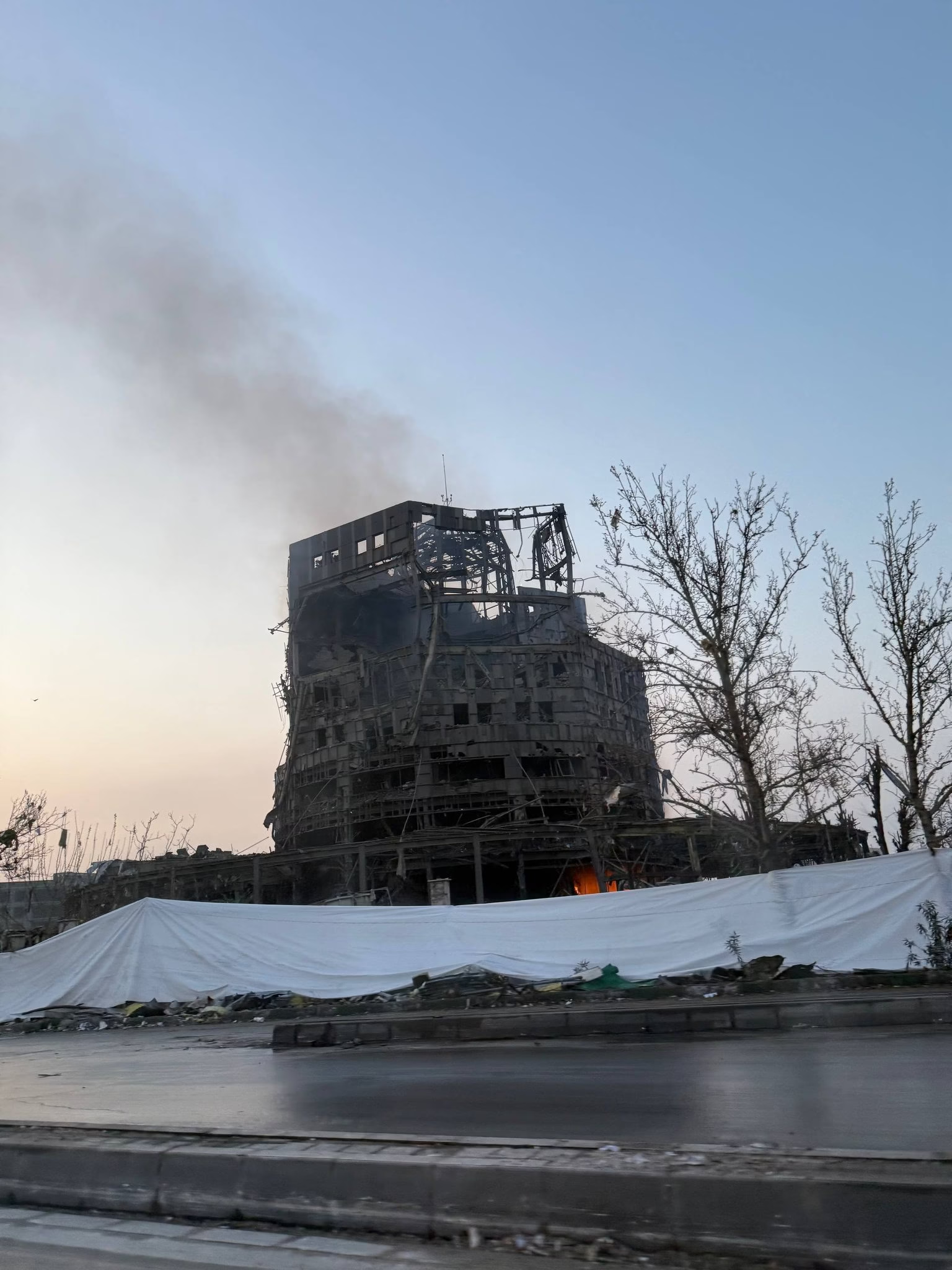
Iranian Space Research Centre Strike
Shocking video footage circulating online has captured the moment powerful explosions rocked a key Iranian facility in the heart of the capital. The Iranian Space Research Centre Strike, long regarded as the cornerstone of the country’s satellite and intelligence capabilities, now lies heavily damaged following targeted strikes attributed to Israeli and US forces. This latest escalation in the ongoing regional conflict has sent ripples across the Middle East and beyond, raising urgent questions about Iran’s military space program and the future of its defense infrastructure.
The strikes, which occurred on Friday evening, targeted the facility in the Tarasht district of west Tehran. Multiple independent videos, including dash-cam recordings from passing vehicles and citizen-submitted clips shared with international media outlets, show bright flashes lighting up the night sky followed by thick plumes of smoke rising from the site. Eyewitness accounts describe the blasts as intense and sustained, leaving visible structural damage to the buildings that house sensitive laboratories and research operations. While Iranian authorities have remained largely silent on the specifics so far, the visual evidence paints a clear picture of significant destruction at what Israel describes as a critical military asset.
This is not an isolated incident but part of a broader wave of airstrikes across Tehran and other Iranian locations. Israeli military officials have confirmed the operation, stating that their forces deliberately hit the centre to disrupt Iran’s ability to advance its space-based technologies. The timing aligns with heightened tensions that have defined the past weeks, as both sides exchange blows in a conflict that shows no immediate signs of slowing down.
Understanding the Iranian Space Research Centre (ISRC)
To grasp why this facility matters so much, it helps to look at its role within Iran’s larger ambitions. Established in 2000 under the Ministry of Information and Communications Technology, the ISRC was originally positioned as a hub for civilian space research. Its mandate included developing satellites for communication, earth observation, and even basic rocket technology. Over the years, it grew into Iran’s primary institution for space-related work, collaborating closely with the Iranian Space Agency on projects that put the country on the global satellite map.
Officially, the centre focused on peaceful applications such as weather monitoring, disaster management, and telecommunications. Iran has proudly launched several satellites through this program, showcasing its growing technical expertise despite international sanctions. However, Western and Israeli intelligence assessments have long alleged a dual-use dimension. They point to connections with military programs, suggesting that the ISRC’s laboratories have supported the development of reconnaissance satellites capable of providing real-time intelligence across the region.
The centre’s work reportedly includes advanced imaging systems, signal processing for mapping, and technologies that could guide precision strikes. Budget figures from public records show steady increases over the past decade, reflecting Tehran’s determination to build an independent space presence. In many ways, the ISRC symbolized Iran’s push for technological self-reliance in a hostile geopolitical environment. Its location in west Tehran, away from more heavily fortified military zones, may have given planners a false sense of security—until now.
The Iranian Space Research Centre Strike: What Israel Claims and Why It Matters
Israeli Defense Forces statements released shortly after the operation left little room for interpretation. They described the ISRC as housing “strategic laboratories” dedicated to military satellite research. According to these briefings, the facility was involved in creating systems for surveillance, intelligence collection, and even directing fire toward targets throughout the Middle East. By taking it out, Israel says it has dealt a blow not just to Iran’s space program but to its overall military posture.
Accompanying the space centre strike was an attack on a major factory producing air defense systems. Officials noted that destroying this site would make it far harder for Iran to rebuild its protective networks against future incursions. The combined operation, part of dozens of targets hit in the Tehran area that night, aimed at degrading core capabilities rather than causing widespread civilian harm. Precision appears to have been a priority, though the full extent of collateral effects remains unclear amid the fog of war.
From an analytical standpoint, this targeting makes strategic sense in the current conflict. Iran’s satellites have been accused of monitoring Israeli movements and supporting proxy groups. Disrupting that network reduces Tehran’s eyes in the sky at a moment when ground-based defenses are already under pressure from repeated airstrikes. It also sends a message: no aspect of Iran’s military modernization is off limits.
Visual Evidence and Damage Assessment
The videos emerging from the scene have become the most compelling proof of the attack’s success. One widely shared dash-cam clip shows a vehicle driving through Tehran as sudden explosions erupt in the distance, illuminating the night with orange fireballs. Another, obtained by independent journalists, reveals a thick column of smoke billowing from the ISRC compound hours later. Satellite imagery analysts are already poring over before-and-after comparisons, though official releases remain limited.
While exact casualty figures or internal assessments from Iran have not surfaced, the visible destruction suggests months—if not years—of setback for reconstruction. Laboratories equipped with specialized equipment for satellite assembly and testing are not easily replaced under current sanctions. Experts following the story note that losing such a concentrated hub could delay Iran’s next satellite launches and weaken its intelligence-gathering edge.
Broader Context in the Escalating Conflict
This development unfolds against a backdrop of sustained US-Israeli operations against Iranian targets. The campaign, which intensified in recent weeks, has focused on missile production sites, air defenses, and leadership infrastructure. Iran has responded with missile barrages toward Israel and strikes on regional assets, though reports indicate a noticeable reduction in the scale and frequency of these counterattacks.
The involvement of US forces alongside Israeli operations has drawn particular attention. Some media outlets describe the strikes as joint efforts, reflecting coordinated strategy in what has become a multi-front challenge. President Trump’s public statements, including calls for de-escalation in key waterways like the Strait of Hormuz, underscore the high stakes for global energy markets and international shipping.
For ordinary Iranians, the strikes hit close to home. Tehran residents reported hearing explosions and seeing smoke, adding to a sense of vulnerability in the capital. The ISRC, while not a household name, represented national pride in scientific achievement. Its damage could fuel both anger toward external powers and internal debates about the costs of confrontation.
International Reactions and Potential Fallout On Iranian Space Research Centre Strike
The global community has reacted with a mix of condemnation and caution. The United Nations Secretary-General has called for an immediate halt to escalation, warning that further violence risks spiraling into a wider regional war. Russia and China have criticized the strikes as violations of sovereignty, while Gulf states have voiced concerns over Iranian retaliation affecting their own territories.
On the other side, supporters of the operation highlight the defensive necessity given Iran’s alleged support for regional instability. Analysts warn that degrading space capabilities might push Iran toward asymmetric responses, such as cyber attacks or renewed proxy activities. Rebuilding the ISRC would require significant resources at a time when the economy already faces strain from sanctions and conflict.
Looking ahead, the damage to the centre could reshape Iran’s long-term strategy. Satellite programs often serve as force multipliers in modern warfare; losing this edge may force a rethink of investment priorities. For Israel and its partners, the operation represents a tactical victory in limiting immediate threats. Yet history shows that such strikes rarely end conflicts—they often reshape them.
As more details emerge from both sides, the world watches closely. The video evidence has already sparked intense online discussion, with experts and citizens alike debating the ethics, effectiveness, and consequences of targeting scientific facilities in wartime. One thing remains certain: the Iranian Space Research Centre’s story is far from over, and its fate will influence the trajectory of this volatile chapter in Middle Eastern affairs.
FAQs: Iranian Space Research Centre Strike
What exactly happened during Iranian Space Research Centre Strike?
Video footage and Israeli military statements confirm that the ISRC in west Tehran suffered major damage from precision strikes on Friday evening. The facility, central to Iran’s satellite development, was hit as part of a larger operation targeting military infrastructure.
Who carried out the Iranian Space Research Centre Strike and why?
The Israeli Defense Forces claimed responsibility, describing the centre as a hub for military satellite research used for surveillance and targeting. Reports also reference US involvement in the broader campaign. The goal, according to officials, was to disrupt Iran’s intelligence and defense capabilities amid ongoing tensions.
Where is the Iranian Space Research Centre located?
The ISRC is situated in the Tarasht area of west Tehran. It has operated there since its founding in 2000 as a key site for space technology research.
How significant is the damage?
Visual evidence from multiple videos shows explosions and subsequent smoke plumes, indicating substantial structural impact. Israeli sources state the centre was effectively destroyed, potentially setting back Iran’s space program by years.
What role does the ISRC play in Iran’s programs?
Officially focused on civilian satellites and rockets, the centre has been linked by critics to military applications including intelligence mapping and fire-direction systems. Its loss affects both scientific progress and strategic monitoring abilities.
Has Iran responded to the Iranian Space Research Centre Strike?
While specific comments on the ISRC strike are limited so far, Iran has launched missile and drone responses to recent operations overall. Officials have consistently labeled such actions as aggression and vowed to defend national interests.
What are the wider implications for the region?
The strike weakens Iran’s air defense production and space intelligence tools, potentially shifting the balance in the current conflict. It also heightens risks of further escalation, affecting global markets, energy routes, and diplomatic efforts.
Will this lead to more strikes or peace talks?
Analysts remain divided. Some see continued pressure on Iranian capabilities, while others hope international mediation can prevent a full-scale war. The coming days will be critical in determining the path forward.