
Step inside First Luxurious Hotel on the Moon -California’s GRU Space’s futuristic plan to build the world’s first luxury hotel on the Moon. Discover the technology, investors, pricing, and how you can reserve a $410K-per-night lunar stay launching in 2032.
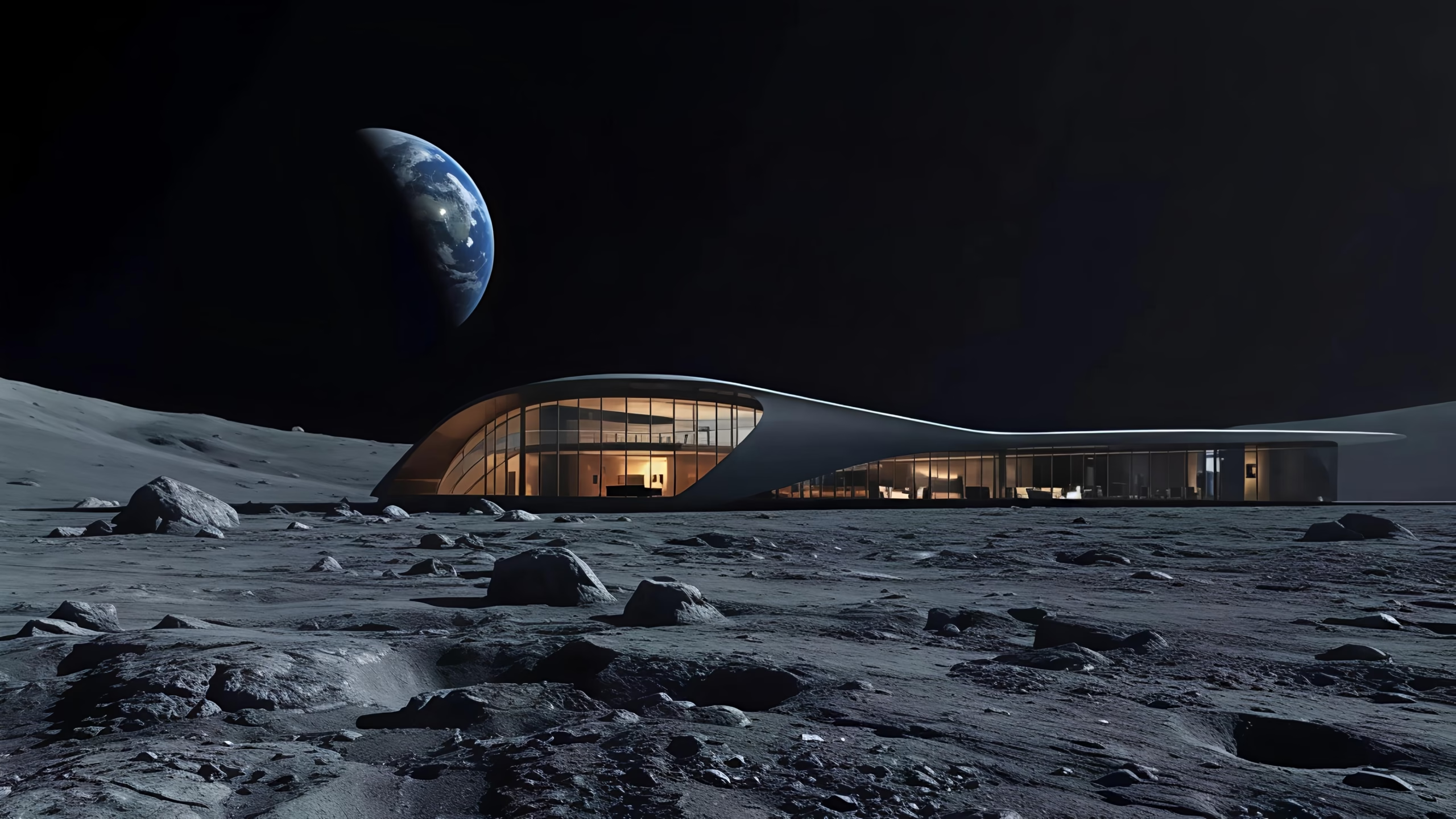
As a space enthusiast and astrophysicist with over a decade of experience studying celestial bodies, I’ve always dreamed of humanity extending its reach beyond Earth. The idea of sipping coffee while gazing at the Earthrise from a lunar suite seemed like science fiction—until now. In January 2026, a California-based startup called Galactic Resource Utilisation Space (GRU Space) announced plans to build the world’s First Luxurious Hotel on the Moon. This ambitious project, backed by heavyweights like investors from SpaceX and Nvidia, is set to turn moonwalking from a historic milestone into a high-end vacation experience. With registrations already open, the dream of lunar tourism is closer than ever.
Founded in 2025 by 22-year-old prodigy Skyler Chan, a UC Berkeley Electrical Engineering and Computer Sciences graduate, GRU Space is pioneering in-situ resource utilization (ISRU) to construct habitats directly from lunar regolith—the fine, dusty soil covering the Moon’s surface. Chan’s background, including internships at Tesla and contributions to NASA-funded 3D printing projects in space, positions her as a visionary in sustainable space architecture. At just 16, she became an Air Force-trained pilot, blending technical prowess with a passion for exploration. This startup isn’t just about luxury; it’s a step toward permanent human settlements on the Moon and beyond.
In this article, we’ll dive into thedetails of GRU Space’s First Luxurious Hotel on the Moon, from its innovative construction methods to the investor lineup, reservation process, and potential challenges. Whether you’re a space aficionado or a curious traveler, this could redefine what it means to “get away from it all.”
The Vision Behind GRU Space’s First Luxurious Hotel on the Moon
GRU Space’s mission is to make the Moon accessible for more than just astronauts. The company envisions a small, exclusive facility starting with four guest suites, complete with private bedrooms, a communal dining area, and recreational spaces designed for low-gravity fun. Imagine bouncing around in a moonwalk-inspired gym or enjoying panoramic views of the lunar landscape through reinforced windows. The hotel, tentatively named “Lunar Haven,” aims to launch its demonstration mission in 2029, with full operations by 2032.
What sets the First Luxurious Hotel on the Moon project apart is its focus on sustainability. Traditional space missions rely on Earth-sourced materials, which are costly and logistically challenging to transport. GRU Space leverages ISRU technology to convert lunar regolith into bricks, concrete-like substances, and even oxygen for life support. This approach not only reduces costs but also minimizes environmental impact on Earth by decreasing the need for heavy launches. Dr. Kevin Cannon, a lunar regolith specialist on the team, has emphasized how this method could pave the way for larger colonies. “We’re not just building a hotel; we’re creating a blueprint for off-world living,” Cannon stated in a recent interview.
The hotel’s design incorporates advanced robotics for construction, with autonomous 3D printers deploying on the lunar surface to build structures layer by layer. These habitats will be pressurized, radiation-shielded, and equipped with life-support systems to handle the Moon’s harsh environment—extreme temperatures, vacuum, and cosmic rays. Guests can expect amenities like hydroponic gardens for fresh food, virtual reality simulations of Earth activities, and even a spa with low-gravity massages. The experience promises to blend adventure with opulence, appealing to ultra-wealthy individuals seeking the ultimate bragging rights.
Key Investors Fueling the Lunar Dream
No space venture succeeds without substantial backing, and GRU Space has secured an impressive roster of investors. While not directly from Elon Musk, affiliations with SpaceX come through shared investors who see synergy in reusable rocket technology for lunar transport. SpaceX’s Starship, capable of carrying large payloads to the Moon, is a likely partner for delivering construction materials and guests.
Nvidia’s involvement stems from its Inception program, which supports startups using AI and GPU technology. GRU Space utilizes Nvidia’s hardware for simulating lunar environments, optimizing 3D printing algorithms, and managing autonomous systems. This tech integration ensures precise construction and real-time adjustments to variables like regolith composition.
Other notable backers include Y Combinator’s Winter 2026 batch and defense firm Anduril, known for its autonomous systems. These investments total over $150 million in seed funding, highlighting confidence in Chan’s team, which also includes Dr. Robert Lillis, a principal investigator on NASA Mars missions. This blend of tech, aerospace, and defense expertise underscores the project’s credibility in a field often plagued by overhyped promises.
How to Book Your Stay on the First Luxurious Hotel on the Moon?
Excitement is building, with reservations already open on GRU Space’s website. To secure a spot, prospective guests must make a deposit ranging from $250,000 to $1 million, depending on the package. Nightly rates are projected at around $410,000, making this an ultra-exclusive affair. The initial stays will be short—likely 7 to 14 days—to account for travel time via spacecraft.
The journey itself is part of the allure. Guests will launch from Earth aboard a commercial spacecraft, possibly SpaceX’s Starship, enduring a multi-day trip to lunar orbit before descending to the surface. Once there, activities include guided moonwalks, scientific experiments, and stargazing sessions unmatched by any Earth-based observatory. Safety is paramount, with rigorous health screenings and training required beforehand.
For those not ready to commit financially, GRU Space offers virtual tours and merchandise, building a community around the project. As costs decrease with technological advancements, the company aims to lower prices, potentially making lunar trips more accessible by the 2040s.
Technological Innovations Powering the Project
At the heart of GRU Space’s success is cutting-edge technology. ISRU isn’t new—NASA has experimented with it since the Apollo era—but GRU Space advances it with AI-driven efficiency. Regolith is sintered (heated and fused) into durable materials using solar-powered lasers, creating structures stronger than traditional concrete.
Life support systems draw from closed-loop designs used on the International Space Station, recycling water and air with near-perfect efficiency. Power comes from solar panels and potentially small nuclear reactors for reliability during the two-week lunar night. Communication with Earth will be seamless via laser links, allowing guests to video call loved ones or stream their adventures.
Challenges remain, such as dust mitigation—lunar regolith is abrasive and can damage equipment. GRU Space’s solutions include electrostatic cleaners and sealed environments. Radiation protection involves burying parts of the hotel under regolith layers, a technique tested in simulations.
Challenges and Ethical Considerations in Lunar Tourism
While thrilling, lunar tourism raises questions. Environmental impact on the Moon, though minimal compared to Earth, includes preserving scientific sites like Apollo landing zones. GRU Space commits to “leave no trace” policies, but critics argue commercialization could lead to overuse.
Economically, the high costs exacerbate inequality—only the super-rich can afford it initially. However, proponents like Chan argue that early adopters fund innovations benefiting all, similar to how commercial aviation evolved from luxury to mass transit.
Regulatory hurdles are significant. International treaties like the Outer Space Treaty govern lunar activities, requiring approvals from bodies like the FAA and UN. Safety standards for civilian space travel are evolving, with potential delays if technical issues arise.
Despite these, optimism prevails. Projects like this could spur economic growth in the “lunar economy,” creating jobs in aerospace, materials science, and tourism.
The Future of Space Tourism Beyond the Moon
GRU Space’s hotel is a milestone in a broader trend. Competitors like Blue Origin and Virgin Galactic are expanding suborbital flights, while NASA’s Artemis program plans sustained lunar presence by the late 2020s. This hotel could serve as a hub for scientists, artists, and adventurers, fostering international collaboration.
Looking ahead, extensions to Mars or asteroid mining colonies are possible. As a woman in STEM, I’m inspired by Chan’s leadership, breaking barriers in a male-dominated field. This project reminds us that space isn’t just for governments—it’s for dreamers.
In conclusion, GRU Space’s lunar hotel bridges science fiction and reality, offering a glimpse into humanity’s multi-planetary future. While timelines may shift, the momentum is undeniable. If you’re intrigued, follow updates and perhaps one day, you’ll be moonwalking in First Luxurious Hotel on the Moon.
Source: https://www.dezeen.com/2026/01/15/gru-space-designs-moon-hotel-lunar-bricks/amp/
FAQs: Your Questions About the First Luxurious Hotel on the Moon
What is GRU Space, and what makes their lunar hotel unique?
GRU Space is a 2025-founded startup specializing in lunar habitats using local resources. Their hotel stands out for its sustainable construction from Moon soil, reducing reliance on Earth shipments.
Who are the key investors in GRU Space?
Investors include affiliates from SpaceX, Nvidia’s Inception program, Y Combinator, and Anduril, providing expertise in rocketry, AI, and defense tech.
How much does a stay at the First Luxurious Hotel on the Moon cost?
Deposits start at $250,000, with nightly rates around $410,000. Prices may decrease as technology advances.
When will the lunar hotel be operational?
A demonstration mission is planned for 2029, with guest stays potentially starting in 2032, subject to regulatory and technical milestones.
Is lunar tourism safe for civilians?
Safety is prioritized with advanced life support, radiation shielding, and pre-flight training. However, space travel inherently carries risks like those in aviation’s early days.
How can I book a reservation? Visit gru.space to make a deposit and join the waitlist. Virtual experiences are available for non-travelers.
What activities will be available at the hotel?
Guests can enjoy moonwalks, low-gravity recreation, dining with Earth views, and scientific tours.
Will the hotel impact the Moon’s environment?
GRU Space adheres to minimal-impact protocols, using ISRU to avoid excessive resource extraction.
Can average people afford lunar trips in the future?
Initially exclusive, costs are expected to drop, similar to how spaceflights have become more accessible over time.
Who is Skyler Chan, the founder of GRU Space?
A 22-year-old UC Berkeley graduate, former Tesla intern, and Air Force pilot, Chan brings innovative vision to space architecture.