
No signal? Blue Origin Targets April 10 Launch with AST SpaceMobile may bring satellite connectivity directly to your phone anywhere on Earth.
Blue Origin Targets April 10 Launch: An Introduction
If you’ve ever stared at your phone in a remote corner of the world and wished for reliable signal without hunting for Wi-Fi, get ready for some genuinely exciting news from the space industry. Blue Origin Targets April 10 Launch for the third flight of its powerful New Glenn rocket, and this one feels different. It’s not just another launch—it’s a bold step toward making space technology work for everyday people on the ground.
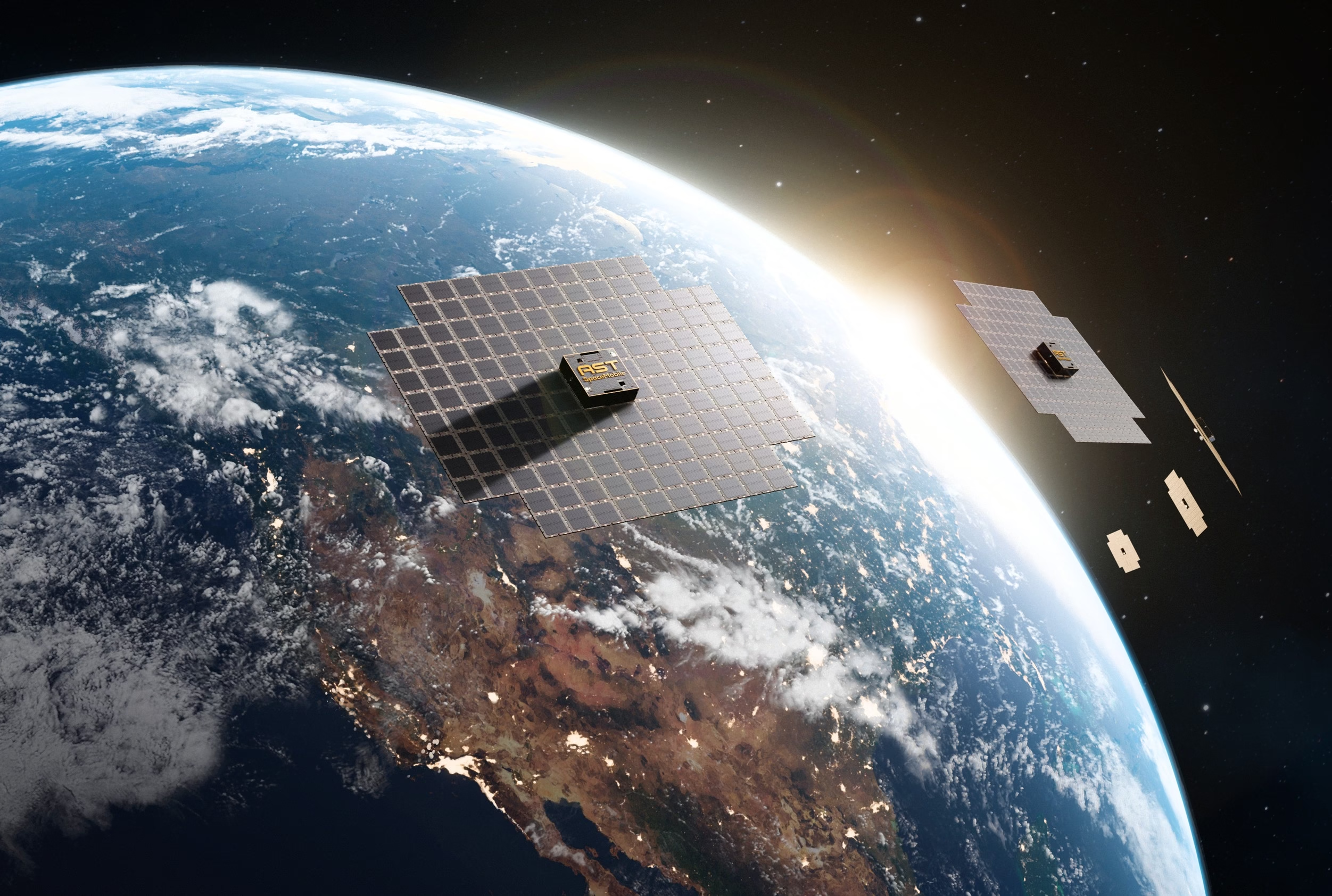
The payload? AST SpaceMobile’s BlueBird 7 satellite, complete with a sprawling 2,400-square-foot communications array designed to beam cellular broadband directly to ordinary smartphones. No special hardware required. Just your phone, the sky, and a connection that could change how we stay linked up across the planet.
This mission marks a pivotal moment for Blue Origin. After two previous successful flights, the company is attempting to reuse a first-stage booster for the first time. That’s huge. Reusability has become the holy grail in rocketry because it slashes costs and opens the door to more frequent missions. Think of it like turning a single-use airplane into one that lands, gets refueled, and flies again.
Blue Origin’s November 2025 flight proved the concept works in practice: the booster touched down safely in the ocean after lofting a NASA spacecraft bound for Mars. Now, that same hardware—or a very similar one—is getting prepped for round two. It’s the kind of progress that makes you wonder how soon we’ll look back on single-use rockets the way we do old flip phones.
Let’s back up a bit and talk about why New Glenn matters in the first place. Developed by Blue Origin under the vision of founder Jeff Bezos, this beast of a rocket stands taller than a 30-story building and is engineered from the ground up for heavy lifting and reusability. Its seven BE-4 engines produce enough thrust to rival some of the biggest vehicles in the industry, and the design emphasizes landing the first stage back on Earth—either on a drone ship at sea or, eventually, on solid ground.
The goal isn’t just to reach orbit; it’s to make reaching orbit routine and affordable. Blue Origin has been methodically testing and iterating, learning from each flight. The first two New Glenn missions already demonstrated reliable performance, but this third outing adds the reuse layer that could accelerate everything.
On board for Blue Origin Targets April 10 Launch target is AST SpaceMobile’s latest BlueBird satellite. These aren’t your average communications birds circling the Earth. BlueBird 7 is part of a next-generation Block 2 design, featuring that enormous 2,400-square-foot phased-array antenna system. Once deployed in orbit, it will unfold like a giant high-tech umbrella, creating a direct link between cell towers in space and the phones in our pockets.
The idea is straightforward but revolutionary: instead of relying solely on ground-based cell networks that struggle in rural areas, oceans, or disaster zones, satellites like this one will provide seamless 5G-level broadband from above. AST SpaceMobile has been partnering with major carriers worldwide to make this a reality, and BlueBird 7 represents another key piece in their growing puzzle.
This will be the second Block 2 satellite in the constellation. AST’s broader plan calls for 45 to 60 of these units in orbit by the end of 2026, creating a network capable of delivering connectivity to billions of people who currently live without reliable service. Imagine farmers in remote villages, sailors mid-ocean, or first responders in the aftermath of a hurricane—all able to make calls, send texts, and access data without waiting for towers to be rebuilt.
It’s the kind of technology that bridges the digital divide in ways fiber optics and traditional cell infrastructure simply can’t. And because the satellites are designed to work with existing phone hardware, the barrier to entry is incredibly low. No need for bulky satellite phones or expensive add-ons—just pull out the device you already own.
What makes this particular flight even more compelling is the timing. April is shaping up to be an absolute frenzy on the Space Coast in Florida. We’re talking about Artemis II potentially sending astronauts around the Moon, possible Starship test flights from SpaceX, and a host of other commercial and government missions all crammed into the same calendar window. Launch pads from Cape Canaveral to Kennedy Space Center are booked solid, and the skies above Florida will be buzzing with activity.
Blue Origin’s New Glenn, launching from its dedicated pad at Cape Canaveral Space Force Station, adds another layer of American innovation to the mix. It’s a reminder that the space race isn’t just about one company dominating—it’s a collaborative, competitive ecosystem pushing boundaries every month.
Of course, nothing in rocketry is ever guaranteed, especially on a reuse attempt. Teams at Blue Origin have been poring over data from that November 2025 ocean landing, inspecting every bolt, valve, and engine component for signs of wear. The booster endured the fiery reentry, the supersonic descent, and the splashdown—conditions that would destroy lesser hardware. Successfully flying it again would prove that New Glenn can handle the rigors of multiple missions without a complete factory rebuild each time. That kind of reliability could drive down launch prices dramatically, making space more accessible not just for giant corporations but for smaller research teams, universities, and even emerging nations looking to get their own satellites aloft.
From a broader perspective, this mission highlights how private space companies are stepping up to tackle problems once reserved for government agencies. NASA’s involvement in the previous flight—sending a Mars-bound spacecraft—shows the deepening partnership between public and private sectors. Blue Origin isn’t just building rockets for show; they’re supporting deep-space exploration while simultaneously enabling practical, Earth-focused applications like AST’s connectivity network. It’s a dual-use strategy that benefits science, commerce, and society all at once.
Let’s talk numbers for a moment, because they paint a vivid picture of the scale here. That 2,400-square-foot array on BlueBird 7 is roughly the size of a standard basketball court once fully deployed. It has to survive the violent vibrations of launch, the vacuum of space, and the temperature swings from scorching sunlight to frigid shadow. Engineers have tested and retested the unfolding mechanism countless times on the ground, but there’s always that nail-biting moment when it actually happens 300 miles above Earth. If successful, BlueBird 7 joins its Block 2 sibling already in orbit, and together they begin the real-world testing that will pave the way for the full constellation.
For AST SpaceMobile, this Blue Origin Targets April 10 Launch is more than a delivery—it’s validation. The company has poured years into perfecting the technology, navigating regulatory hurdles with the FCC and international bodies, and securing partnerships with telecom giants. Their vision of space-based cellular service isn’t science fiction anymore; it’s on the cusp of becoming everyday reality. And with Blue Origin providing the ride, the timeline is accelerating. By the end of the year, that 45-to-60 satellite goal starts looking less like a dream and more like a checklist.
Watching this unfold feels personal for anyone who follows space news. We’ve seen reusable rockets transform the industry before—first with smaller vehicles, then with heavier ones. New Glenn represents the next evolution: a truly heavy-lift reusable system that can carry massive payloads like these satellite arrays while keeping costs manageable. Every successful reuse attempt chips away at the old model of disposable hardware, freeing up resources for innovation elsewhere. It also raises the bar for the entire sector, encouraging competitors to iterate faster and smarter.
As we count down to Blue Origin Targets April 10 Launch, expect the usual mix of anticipation and last-minute checks. Weather in Florida can be unpredictable in spring, with thunderstorms rolling through and wind shear posing challenges. Launch windows are narrow, and teams will be monitoring everything from engine health to satellite power systems right up until ignition. But if history is any guide, Blue Origin’s methodical approach has paid off before, and there’s every reason to believe it will again.
The bigger story here isn’t just Blue Origin Targets April 10 Launch one rocket or one satellite. It’s about how space technology is quietly weaving itself into the fabric of daily life. Cellular broadband from orbit could mean better emergency response, improved education in underserved areas, stronger business connections in remote regions, and even new opportunities for scientific research that relies on constant data flow. It’s the kind of progress that doesn’t always make headlines until it’s already changing things for the better.
So mark your calendars for mid-April. Whether you’re a space enthusiast tracking every launch or simply someone who appreciates reliable phone service, this New Glenn flight carries more than hardware—it carries the promise of a more connected world. Blue Origin and AST SpaceMobile are betting big on reusability and direct-to-phone technology, and if Blue Origin Targets April 10 Launch goes as planned, we’ll all be one step closer to a future where the sky truly is the limit for connectivity.
In the end, these missions remind us why we look up. Space exploration has always been about pushing human capability further, but today it’s also about bringing tangible benefits back down to Earth. Blue Origin Targets April 10 Launch could be the day that story takes another leap forward. Keep an eye on the skies—and your signal bars. The future is launching sooner than you think.