
Rocket Lab’s first 2026 Electron launch “The Cosmos Will See You Now” successfully deployed two Open Cosmos satellites to 1,050 km orbit. Discover mission details, the 80th Electron milestone, and what it means for secure LEO broadband connectivity.
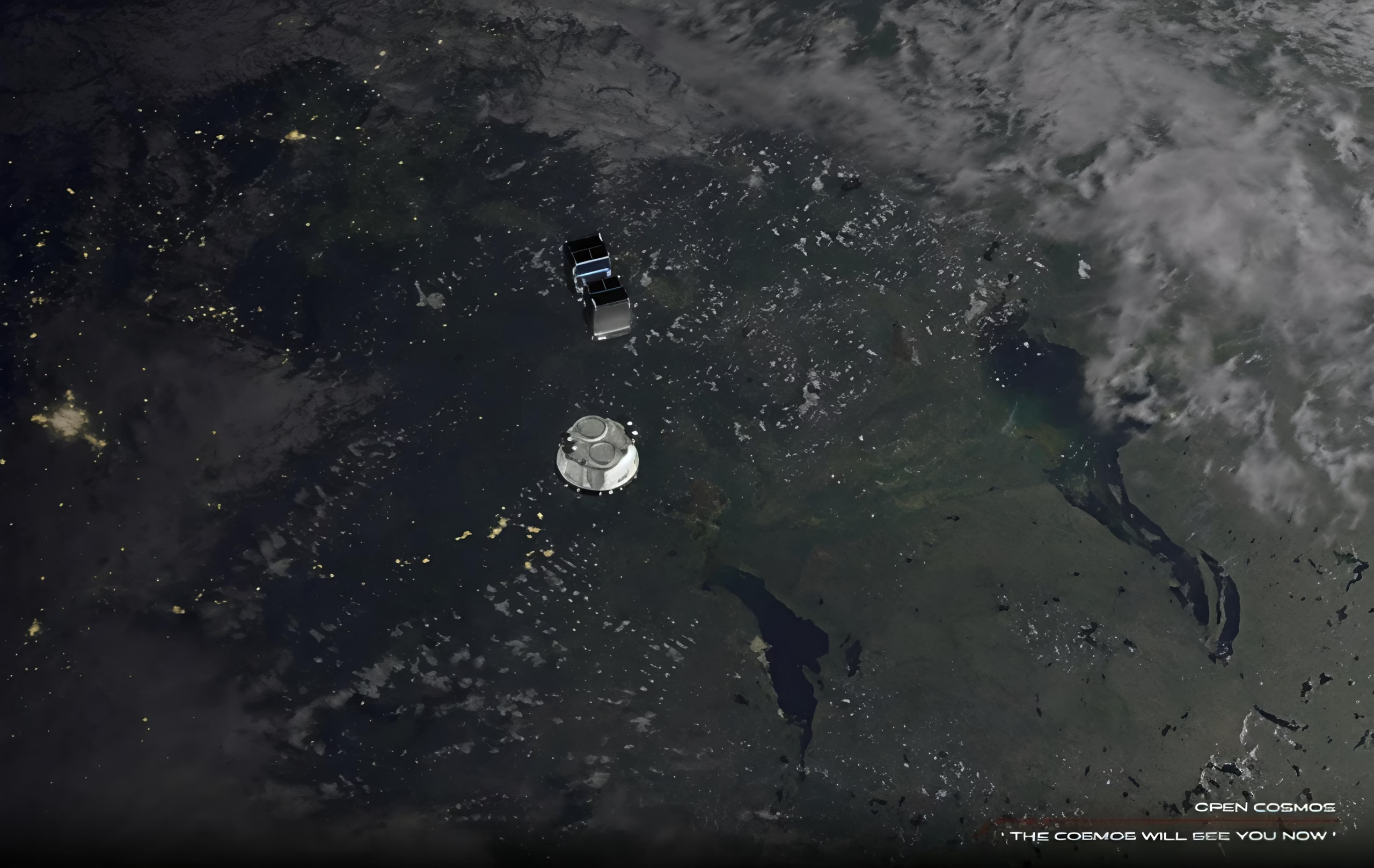
Hey everyone, if you were up late or early depending on your time zone, you caught something special on January 22, 2026. Rocket Lab just nailed their opening act of the year with a textbook-perfect Electron launch from the Mahia Peninsula in New Zealand. The mission, carrying the catchy name “The Cosmos Will See You Now,” sent two satellites soaring to a precise 1,050 km circular orbit for the European company Open Cosmos. This wasn’t just another routine flight—it marked Rocket Lab’s 80th Electron mission overall and proved once again that small rockets can deliver big results.
Let’s break it down step by step, because launches like this deserve more than a quick headline scroll.
Rocket Lab’s first 2026 Electron launch: What Actually Happened
The countdown reached zero at 11:52 pm local time in New Zealand—that’s 10:52 UTC or 5:52 a.m. EST for those following from the Americas. From Launch Complex 1, the 18-meter-tall Electron rocket ignited its nine Rutherford engines on the first stage, producing that signature bright plume against the dark sky. The vehicle climbed steadily, shedding stages as planned, until the kick stage (powered by a Curie engine) took over for the final orbital insertion.
Mission control confirmed success shortly after deployment: both satellites were released exactly where they needed to be in that high 1,050 km orbit. No anomalies, no scrubs, just clean execution from a team that has turned reliability into their calling card. For anyone who’s followed spaceflight for a while, you know how rare “flawless” really is—yet Rocket Lab’s first 2026 Electron launch keeps making it look straightforward.
This Rocket Lab’s first 2026 Electron launch came right on schedule after a short window opening, and the weather cooperated perfectly. Preparations had been humming for days, with engineers running final checks on everything from fuel loading to telemetry links. When the call came to go for launch, the pad lit up, and the rocket did what it was built to do: get payloads to space efficiently and affordably.
Electron: The Reliable Workhorse of SmallSat Launches
Electron isn’t the biggest rocket out there, but that’s exactly why it wins so many missions. Standing about 18 meters tall and capable of lifting up to 300 kg to low Earth orbit, it’s tailored for dedicated rides rather than cramming multiple payloads together. That means customers get their satellites placed precisely where they want them, without waiting for a ride-share slot to fill up.
The rocket’s secret sauce includes those innovative Rutherford engines—nine on the first stage, one vacuum-optimized version on the second—all featuring electric turbopumps instead of traditional ones. This design keeps things lightweight, efficient, and cost-effective, with launches priced in the ballpark of $7.5 million. Since debuting in 2018, Electron has built an impressive track record, hitting 80 flights with the overwhelming majority succeeding with this Rocket Lab’s first 2026 Electron launch.
Rocket Lab, started by Peter Beck back in 2006, has evolved from a small New Zealand outfit into a major player listed on Nasdaq. They don’t just launch; they design and build spacecraft, components, and even entire missions. This versatility lets them offer end-to-end services, which is a huge draw for companies like Open Cosmos entering the market.
Open Cosmos Steps Into Orbit: The Payload and Its Bigger Purpose
The stars of this show were the two satellites built and operated by Open Cosmos, a UK-based space technology firm focused on making satellite services more accessible and impactful. These weren’t experimental cubesats thrown up for testing; they represent the opening move in Open Cosmos’ plan for a proprietary low Earth orbit telecom constellation.
The goal? Deliver secure, resilient broadband connectivity using high-priority Ka-band spectrum licensed through the Principality of Liechtenstein. This setup targets independent infrastructure for Europe and beyond, providing reliable links even in areas where traditional networks struggle or face disruptions. Think government operations, critical infrastructure, remote communities—places where downtime isn’t an option.
Open Cosmos has been designing and manufacturing these satellites in-house, emphasizing modularity, cost efficiency, and rapid deployment. Launching the first two units marks the shift from ground testing to on-orbit validation. At 1,050 km, the orbit offers good coverage with lower congestion than busier lower altitudes, ideal for testing communication performance and system reliability before scaling up the constellation.
For Open Cosmos, partnering with Rocket Lab on a dedicated mission was a strategic choice. It ensured precise placement and avoided the variables of shared rides. This launch, coming shortly after they secured their spectrum rights, signals serious momentum toward building a full network.
Why This Launch Stands Out in the Bigger Space Picture
In an era where mega-constellations dominate headlines, missions like this remind us that the smallsat sector is thriving. Dedicated launches give emerging players the flexibility they need to innovate without massive upfront costs. Rocket Lab’s success here reinforces their position as a go-to provider for that niche, especially as demand for sovereign or specialized connectivity grows.
Economically, the ripple effects are real. New Zealand’s space sector benefits from hosting these launches, creating high-tech jobs and attracting investment. Globally, the push for resilient space-based networks supports everything from disaster response to secure data transfer in an increasingly connected—and sometimes unstable—world.
Rocket Lab’s first 2026 Electron launch: Reaching the 80th Electron flight is no small achievement either. It shows maturity in design, manufacturing, and operations. While competitors chase reusability or scale, Rocket Lab has focused on cadence and precision, launching frequently and reliably. This consistency builds trust, and trust brings more customers.
Of course, the industry isn’t without challenges. Supply chains, regulations, and orbital debris concerns remain hurdles. But successes like “The Cosmos Will See You Now” demonstrate progress toward sustainable, inclusive space utilization.
What’s Coming Next for Rocket Lab and the SmallSat World
Rocket Lab’s first 2026 Electron launch with 2026 underway, Rocket Lab has a busy roadmap. More Electron missions are in the queue, keeping the launch tempo high. The real long-term excitement surrounds Neutron, their medium-class rocket in development. Designed for larger payloads and partial reusability, Neutron aims to handle constellation deployments at scale, potentially competing in markets currently dominated by bigger vehicles.
For Open Cosmos, these initial satellites are just the beginning. Successful on-orbit performance will pave the way for additional launches and constellation expansion. The focus on European-led capabilities highlights a broader trend toward diversified space infrastructure.
As someone who follows these developments closely, it’s energizing to see companies like these pushing boundaries. Small rockets enabling ambitious telecom networks? That’s the kind of innovation that makes space feel closer and more relevant to everyday life.
Final Thoughts: A Strong Start to a Promising Year
“The Cosmos Will See You Now” delivered more than just two satellites—it delivered proof that dedicated small launches remain vital to the space ecosystem. Rocket Lab executed flawlessly, Open Cosmos took a major step forward, and the cosmos got a little more connected. If this sets the tone for 2026, we’re in for an exciting ride.
Keep an eye on upcoming missions, whether through Rocket Lab’s updates or space community discussions. The view from orbit keeps getting better.
Source: https://x.com/i/status/2014308197969129558
FAQs: Rocket Lab’s first 2026 Electron launch
What exactly was the “The Cosmos Will See You Now” mission?
It was Rocket Lab’s first Electron launch of 2026, successfully deploying two satellites for Open Cosmos into a 1,050 km circular orbit to begin their secure LEO broadband constellation.
How many Electron launches has Rocket Lab completed?
This mission was the 80th overall for the Electron rocket, marking a significant milestone in its operational history.
Who is Open Cosmos and what are they building?
Open Cosmos is a UK-based company developing satellites for Earth observation, connectivity, and data services. This launch started their proprietary telecom constellation focused on resilient, high-priority Ka-band broadband for Europe and global users.
Why choose a 1,050 km orbit for these satellites?
This altitude provides broad coverage with reduced interference compared to lower orbits, making it suitable for testing and operating a telecom network while minimizing atmospheric drag effects.
Where did the launch take place?
From Rocket Lab Launch Complex 1 on the Mahia Peninsula in New Zealand, a site chosen for its favorable launch trajectories and minimal restrictions.
What makes Electron different from other rockets?
Electron specializes in dedicated small satellite missions, offering precise orbit insertion, quick turnaround, and affordability through innovative electric-pump engines and a focus on reliability.
Is Rocket Lab working on anything bigger than Electron?
Yes, they’re developing the Neutron rocket for medium-lift capabilities, targeting larger payloads and reusability to support growing constellation demands.
How can someone follow future Rocket Lab launches?
Check Rocket Lab’s official website, social channels, or live stream broadcasts for real-time coverage and announcements.