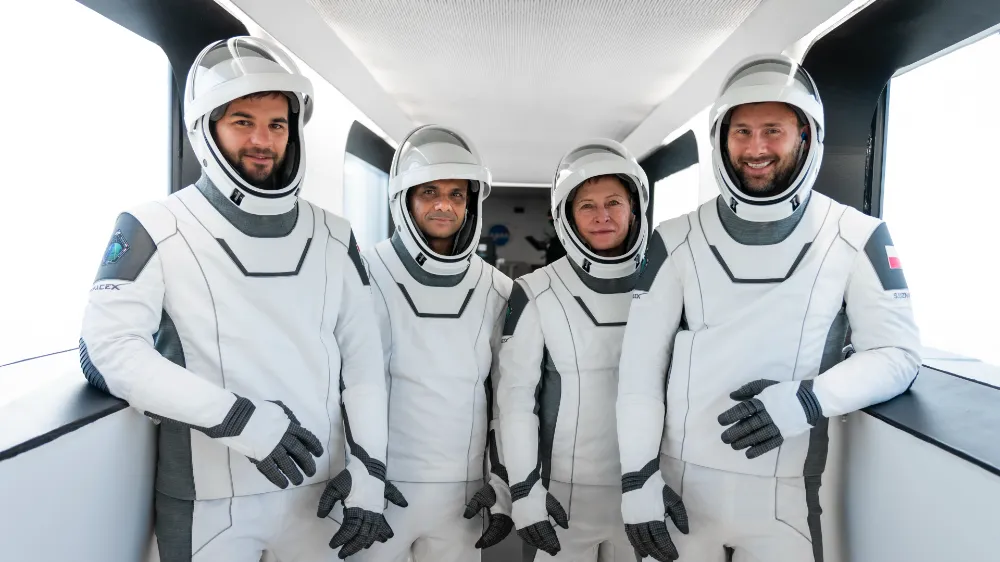
SpaceX Falcon 9 Launches NROL-105 Mission from Vandenberg, deploying classified NRO reconnaissance satellites into low Earth orbit in January 2026.
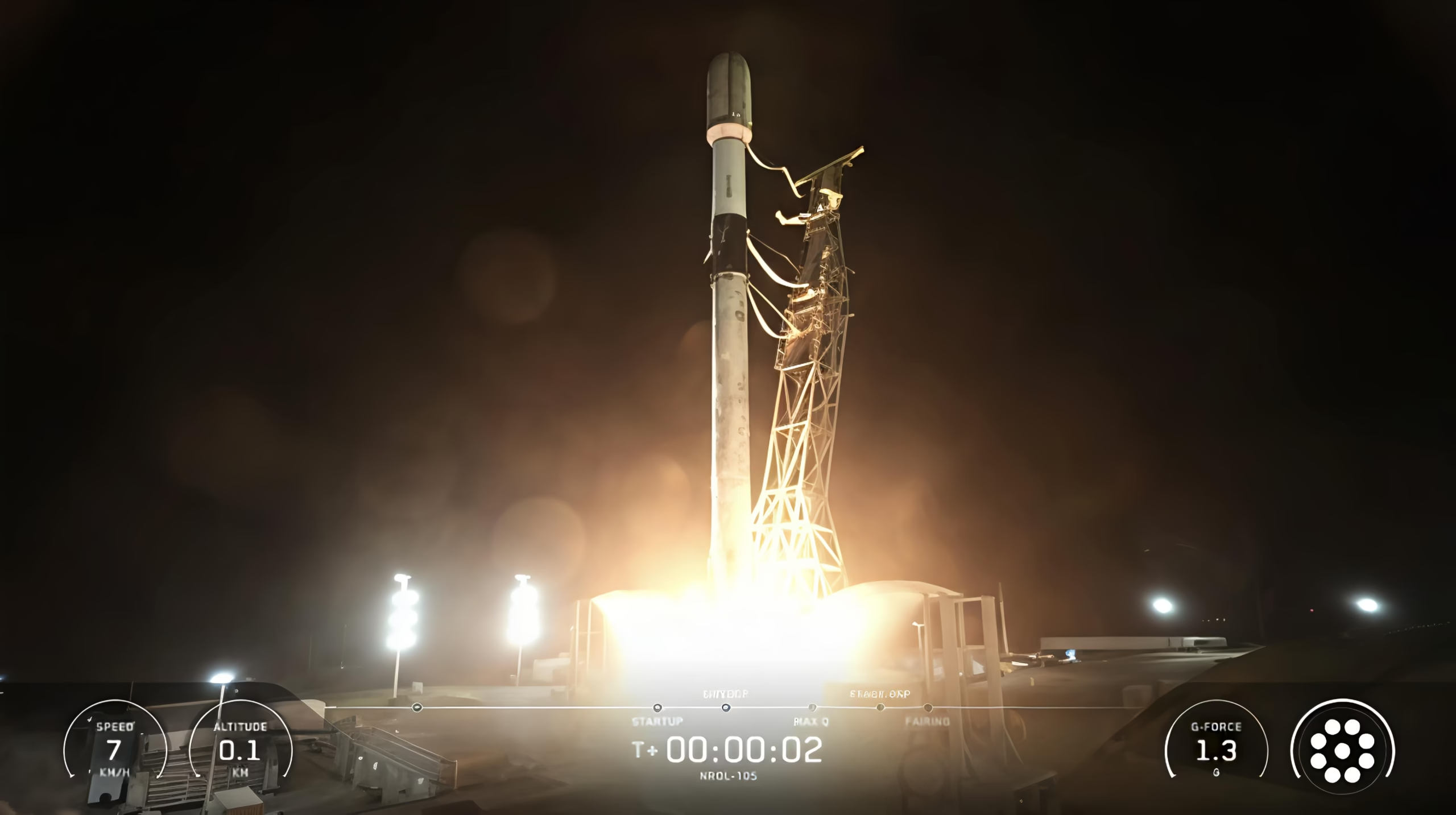
I’ve always been captivated by the wonders of space travel. The sight of a rocket ascending into the heavens never fails to inspire awe. Right now, I’m particularly eager about SpaceX’s forthcoming NROL-105 mission. Set for takeoff from Vandenberg Space Force Base in California, this operation represents the National Reconnaissance Office’s initial venture of 2026 and the twelfth in their advanced proliferated satellite framework. If space technology intrigues you as much as it does me, join me as I delve into the essentials of this significant undertaking. We’ll examine the Falcon 9’s features, the confidential payloads, and more in this detailed overview.
Understanding the NROL-105 Mission
SpaceX Falcon 9 Launches NROL-105 Mission involves a partnership among the NRO, the U.S. Space Force’s Space Launch Delta 30, and SpaceX. Essentially, it aims to strengthen defense mechanisms via sophisticated surveillance tools. The NRO oversees America’s intelligence satellites and is transitioning to a proliferated setup, which involves numerous compact, durable satellites rather than a handful of large ones. This strategy, encapsulated by the phrase “Resilience Through Quantity,” improves data collection and makes the network more resistant to interference.
The mission’s logo is symbolic, with circular patterns evoking the satellite array and an eye-like design representing oversight. It includes motifs of endless vistas and orbital trajectories, highlighting discovery and alertness. Having tracked numerous space initiatives, I appreciate how such symbols merge creativity with technological prowess.
This launch advances the NRO’s series, establishing a group of satellites in low Earth orbit for swift global monitoring. These units offer improved durability against risks and facilitate quick enhancements, transforming contemporary orbital strategies.
Key Information of SpaceX Falcon 9 Launches NROL-105 Mission: Schedule, Site, and Environmental Factors
SpaceX aims for January 16, 2026, to send the Falcon 9 skyward with the NROL-105 cargo. The window spans 35 minutes, commencing at 8:18 p.m. Pacific Time (equivalent to 11:18 p.m. Eastern Time or 4:18 a.m. Coordinated Universal Time on January 17). Should issues arise, such as mechanical problems or adverse conditions, a secondary slot is available on January 17 at 8:04 p.m. Pacific Time.
The departure point is Space Launch Complex 4E at Vandenberg Space Force Base. This facility boasts a storied past, initially supporting older rockets before adaptations for Falcon 9 operations. Its positioning suits polar trajectories, essential for comprehensive Earth observation in reconnaissance efforts. Local communities in regions like Santa Barbara, San Luis Obispo, and Ventura may experience sonic disturbances roughly 8 to 10 minutes post-liftoff during booster recovery—a dramatic auditory display.
Atmospheric conditions are critical for safe launches, and SpaceX demands favorable visibility and minimal gusts. While I can’t provide instant updates, monitoring official announcements is advisable for postponements. From my observations of similar events, environmental variables can be tricky, yet SpaceX excels in adjustments.
Falcon 9: A Leader in Reusable Rocket Technology
Central to this effort is the Falcon 9, SpaceX’s reliable launcher. This dual-stage vehicle reaches approximately 230 feet in height, propelled by nine Merlin engines in the initial phase, generating substantial thrust. The upper stage employs a vacuum-adapted Merlin engine, while the cargo is shielded by a composite enclosure that separates in orbit.
Falcon 9’s innovation lies in its recoverability. The booster for this flight is on its second outing, following a prior satellite deployment. Recycling components reduces expenses and boosts frequency—SpaceX has achieved numerous successful retrievals. Here, the booster plans a landing at Landing Zone 4 on-site at Vandenberg, shortly after separation.
The ascent process is meticulously orchestrated. Based on standard sequences, here’s an estimated progression ofSpaceX Falcon 9 Launches NROL-105 Mission(times from takeoff):
- 00:00:00 – Ignition and ascent
- 00:02:19 – Peak aerodynamic stress
- 00:02:28 – Primary engines halt
- 00:02:32 – Stages detach
- 00:02:39 – Upper engine ignites
- 00:03:22 – Enclosure release
- 00:06:14 – Reentry maneuver concludes
- 00:07:12 – Landing sequence initiates
- 00:07:39 – Booster touches down
- 00:08:41 – Upper engine shutdown
This precise routine guarantees the cargo attains its designated path. As a female advocate for science and engineering, I’m impressed by SpaceX’s role in democratizing and sustaining space access.
The Cargo: Classified Surveillance Units
Specifics about the NROL-105 cargo are restricted, typical for NRO projects. It’s confirmed as the twelfth group in the proliferated network, developed collaboratively with SpaceX and Northrop Grumman. These diminutive devices focus on visual and other intelligence gathering, positioned at reduced heights for expedited planetary traversal.
Adopting a distributed model enables collaborative functionality among many units, ensuring backup and accelerated information transfer. Amid rising orbital challenges, this robustness is vital. Although quantities and particulars are concealed, earlier missions have released sets to augment security intelligence.
My fascination with aerospace makes the confidentiality appealing—it infuses intrigue into these remarkable occurrences. These assets will support defense objectives while respecting non-military boundaries.
Significance of SpaceX Falcon 9 Launches NROL-105 Mission in the 2026 Landscape
The year 2026 holds promise for aerospace achievements. As the NRO’s opening act, NROL-105 paves the way for further distributed launches. SpaceX maintains its prominence through regular deployments, encompassing network expansions and human transports. This initiative exemplifies the strengthening ties between public entities and commercial firms like SpaceX, fostering rapid progress.
On a broader scale, such operations motivate future innovators. Recalling my early encounters with launches, they ignited a enduring interest. Amid global issues, space pursuits underscore our capacity for extraordinary accomplishments.
Viewing Options for the SpaceX Falcon 9 Launches NROL-105 Mission
Catch the event! SpaceX offers a live broadcast on their site and X platform, starting minutes before departure. Access it via www.spacex.com/launches or @SpaceX on X. For locals, observation areas may provide sights, but adhere to regulations.
Nearby, anticipate potential sound waves—a testament to the immense energy. Worldwide audiences benefit from multi-angle feeds, including rocket perspectives.
Final Thoughts: Advancing Toward Distributed Orbital Systems
SpaceX Falcon 9 Launches NROL-105 Mission a mere takeoff; it’s a pivotal advancement in sturdy space networks. As the Falcon 9 activates this evening, it embodies aspirations for superior defense and innovation. Regardless of your experience level in space matters, this promises thrill. Watch for after-launch reports—hoping for seamless execution!
Source: https://x.com/i/status/2012438697229144526
For inquiries, see the FAQs compiled from frequent questions.
FAQs on SpaceX Falcon 9 Launches NROL-105 Mission
What does the NROL-105 mission aim to achieve?
SpaceX Falcon 9 Launches NROL-105 Mission involves placing multiple small surveillance satellites for the NRO within their proliferated framework, designed to boost intelligence gathering with increased durability.
When and from where will it launch?
Targeted for January 16, 2026, at 8:18 p.m. Pacific Time from Space Launch Complex 4E, Vandenberg Space Force Base, California. Alternative on January 17 if required.
Is the Falcon 9 booster recoverable?
Indeed, it will try to land at Landing Zone 4 at the base, demonstrating SpaceX’s recovery expertise.
Where to view the broadcast?
Access SpaceX’s free stream on their website or X, with commentary beginning just prior to takeoff.
Why is this launch noteworthy?
As the NRO’s 2026 debut and twelfth proliferated effort, it emphasizes a move to flexible, abundant satellites for enhanced security.
Any concerns for the public?
Nearby areas might encounter sonic effects, but the process is securely overseen.
What’s ahead for SpaceX and NRO?
Additional proliferated missions, alongside SpaceX’s network and vehicle advancements. Expect more highlights in 2026.
Starship Set to Launch Again Next Month: Elon Musk’s Bold Next Step in Space Exploration